‘Steps To Cope’ Service

The STEPS TO COPE service is for young people aged 11-25 who are affected by a parent or family member alcohol and/or drug use or mental health problems.

The service offers:

  • Support for young people aged 11-25 alongside their family members;
  • Individual 1 to 1 support sessions;
  • Online information, self-care tools and resources;
  • Information and awareness sessions designed to be delivered in education and community settings for use by mental health practitioners;
  • A young persons participation group.

For further info:  email stc@acsert.biz   telephone 0800 2545 123   visit www.ascert.biz

Download Poster

Northern Family Support Hubs attended Youth Fairs

The Northern Family Support Hubs attended three Youth Fairs throughout the month of February. Five local schools were in attendance at the Youth Fairs – Carrick Academy, Carrick Grammar, Ulidia Integrated College, Larne Grammar and St. Killian’s College. The events were very successful and a great chance for young people to learn what support and services is available to them in their area.

Click here to read more on the importance and feedback from a young person attending the event. 

New Organ Donation Legislation to Come into Effect on 1 June 2023 (Dáithí’s Law)

From 1 June 2023, all adults in Northern Ireland will be considered potential organ donors unless they choose to opt out or are in an excluded group.

The Organ and Tissue Donation (Deemed Consent) legislation, known as ‘Dáithí’s Law’ in honour of six-year-old Dáithí Mac Gabhann, will change the way consent is granted. The 1st of June is exactly 5 years from when Dáithí was added to the transplant waiting list.

We encourage everyone to consider their organ donation decision, record it on the NHS Organ Donor Register, and most importantly #HaveTheChat with loved ones so they are aware of your decision.

Read more about the law change at www.organdonationni.info/changes-to-the-law or stay up to date with @OrganDonationNI on Facebook, Instagram and Twitter.

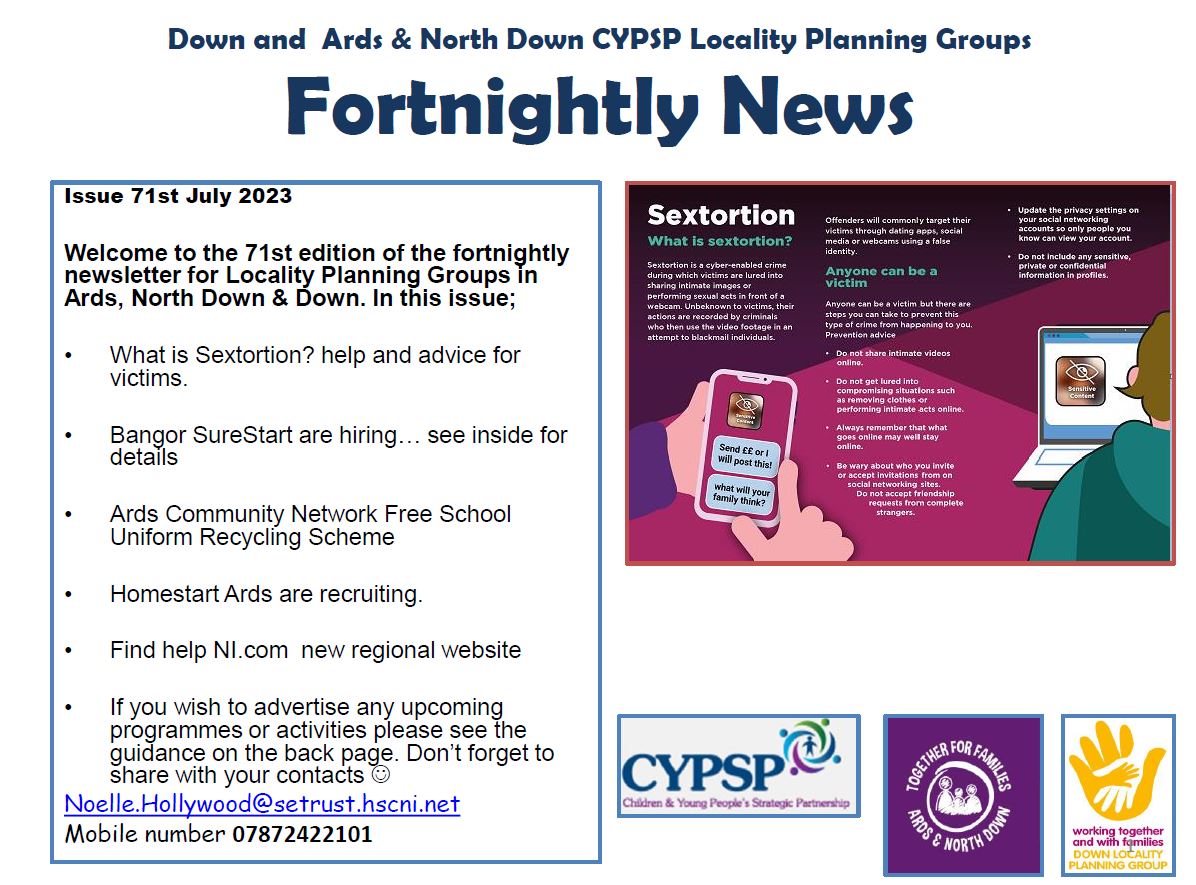
Sextortion

“Literally, in seconds, they used my image to blackmail me”

They’re words we hope you’ll never have to say, and we’re asking you, and your friends, to get wise to the ‘amorous’ advances of online fraudsters.

The warning from detectives comes in response to increasing reports of online blackmail of an intimate or sexual nature.  This blackmail is commonly known as ‘sextortion’.

Detective Chief Inspector David McBurney said: “Typically, a person uses a false identity to befriend a victim via social media.  The exchange may start with flirting or flattery, but ends with the victim coaxed into sending intimate images or performing sexual acts online, unwittingly in front of a camera.

“Behind the fake and attractive guise, there’s a criminal. These people are often part of sophisticated and organised crime groups, mostly based overseas. They extort their victims by threatening to share those images or recordings unless demands for money are met. 

“Innocent people are left feeling humiliated and distraught, but the important message is that victims shouldn’t let embarrassment stop them from reporting what’s happened.”

In 2022, the Police Service of Northern Ireland received approximately 40 reports of sextortion a month. This compares to 2020 when between 10 and 20 reports were received per month.

The majority (80 per cent) of victims are males under the age 30; and approximately 15 per cent of these are aged 15 or younger.

Detective Chief Inspector McBurney continued: “My message, in the first instance, is to be on your guard.  Please be aware of the risks of sharing intimate images online, and if someone is pushing you to do this, then alarm bells should be ringing.

“But people do make mistakes, no one is infallible, and if you’ve been a victim of sextortion, then you’re certainly not alone. 

“Don’t panic; don’t respond to demands; and don’t enter into further communication. If you can, confide in a trusted friend or family member, and please contact officers immediately on 101.” 


The Police Service has issued online safety advice, which includes:

  • Don’t get lured or pushed into compromising situations. Trust your gut, and end uncomfortable situations immediately.
  • Always remember that what goes online may well stay online.
  • Be wary about whom you invite or accept invitations from on social networking sites. Do not accept friendship requests from complete strangers.
  • Update the privacy settings on your social networking accounts so only people you know can view your account. Do not include any sensitive or private information in profiles.

For further information and details of organisations who can help, visit www.psni.police.uk/sextortion