Short course on Early Adversity and Developmental Trauma with Ulster University School of Psychology.
Contact Dr. Dominic McSherry; d.mcsherry@ulster.ac.uk for more information.
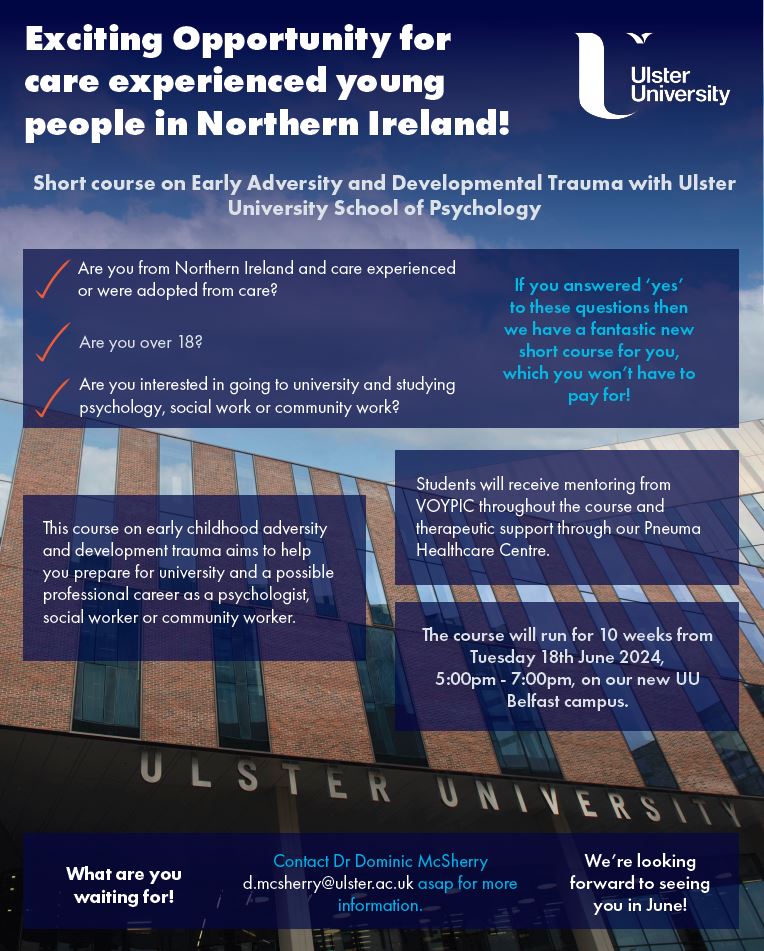
Short course on Early Adversity and Developmental Trauma with Ulster University School of Psychology.
Contact Dr. Dominic McSherry; d.mcsherry@ulster.ac.uk for more information.
Welcome to Issue 126 of our fortnightly newsletter, ‘FYI’ (For Your Information).
(Note: Newsletter will download directly to your device. Look out for the pop-up box and click on open file when it appears)
This is the first of 3 special editions to promote upcoming summer activities for children and young people in the Southern Area. You will see a call for submissions on Page 4 on what to submit and we are very keen to also take ides for no / very low cost activities that families can do over the summer months with their children.
We have also included our School Uniform Toolkit on Page 3: A free practical resource for use by any group who want to set up and run a recycling scheme in their area. For anyone wishing to find out more about this and learn how we can help support you, please contact us at the usual address.
Locality Development Team (Southern Trust Area)
Springboard are currently recruiting young people for new Programmes:
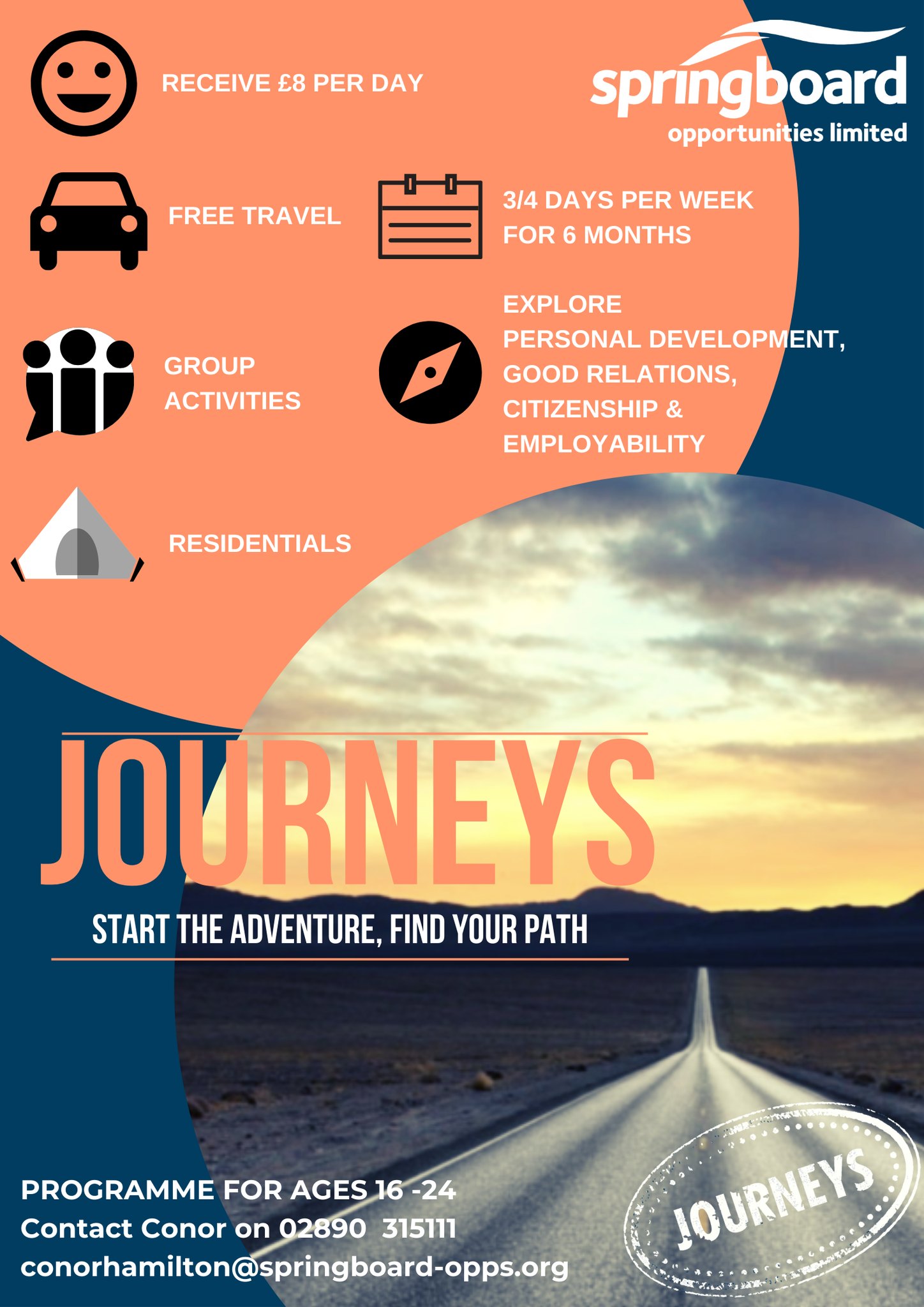
Flyer – Journeys consists of 4 distinct programmes, each tailored to specific needs, aimed at young people aged between 16 – 24 years from across the Greater Belfast area, depending on what programme they choose. Journeys provides young people the opportunity to create positive change both for themselves and their communities. There are four key themes that underpin Journeys which are Personal development, Good Relations, Citizenship and Employability.
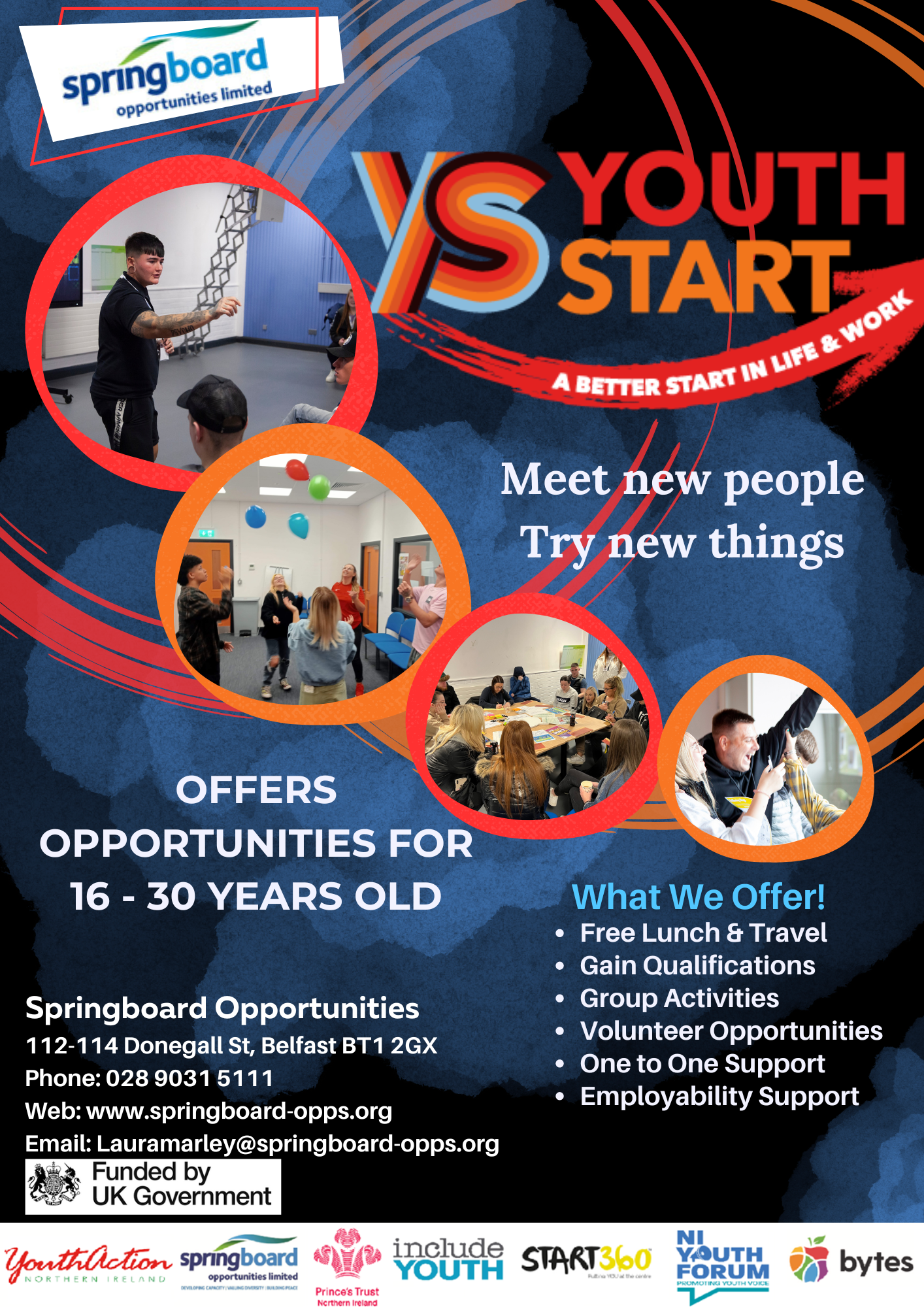
Flyer – YouthStart provides participants aged 16 – 30 assistance to work out their career aspirations and steer through their employability and career pathway.The programme supports individual development to build confidence, overcome barriers and understand their tailored career development ‘map’. The programme can be tailored around the individual through 1-1 support, group work and training to meet specific needs.
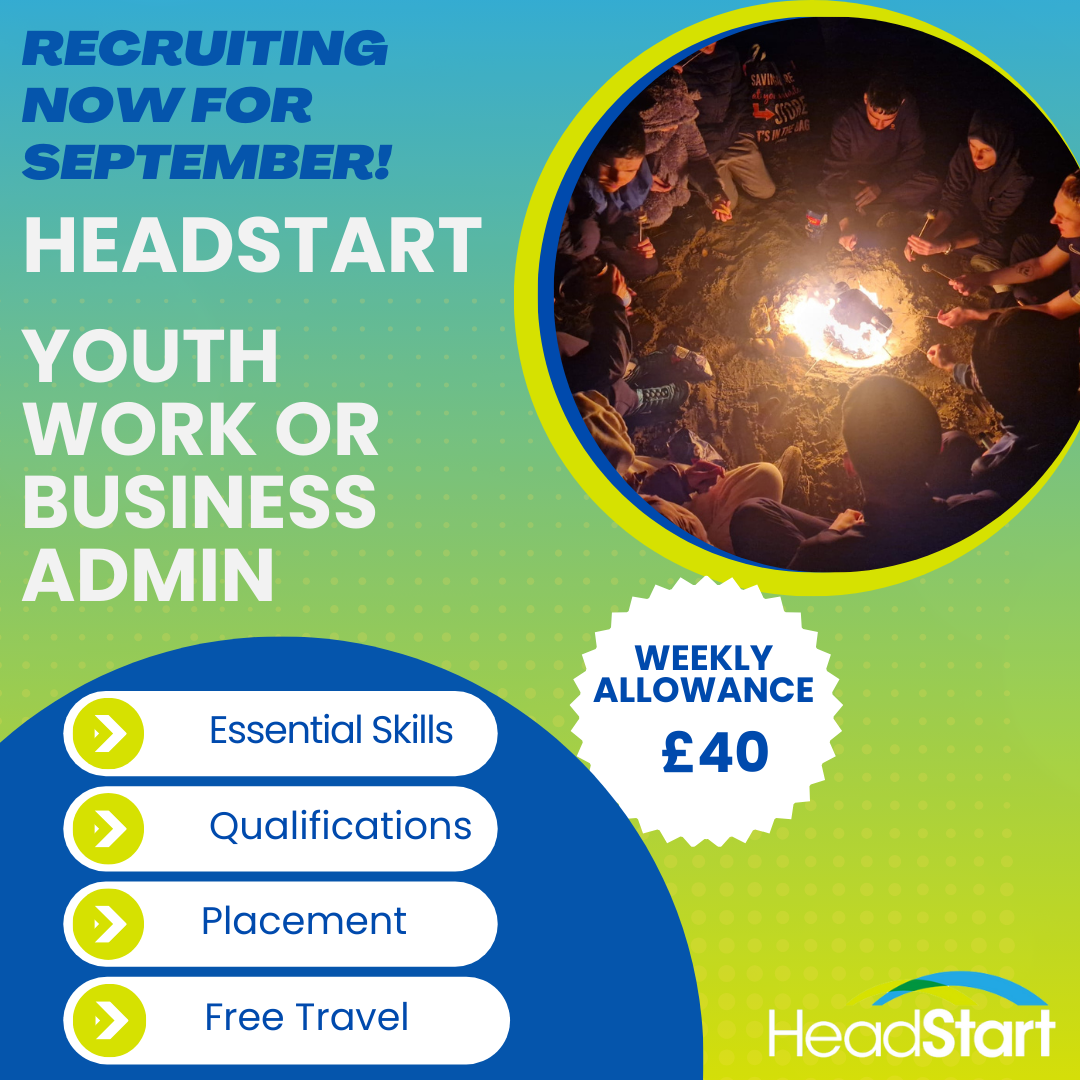
Flyer – HeadStart is a Skills for life and work programme working with 16-23* year olds (criteria applies). The programme operates over one year, 4 days per week starting in September. Young people can gain Level 1 in Youth Work or Level 1 in Business Administration as well as Essential Skills in Maths, English and ICT. Young people will also build key personal and employability skills through work placements.
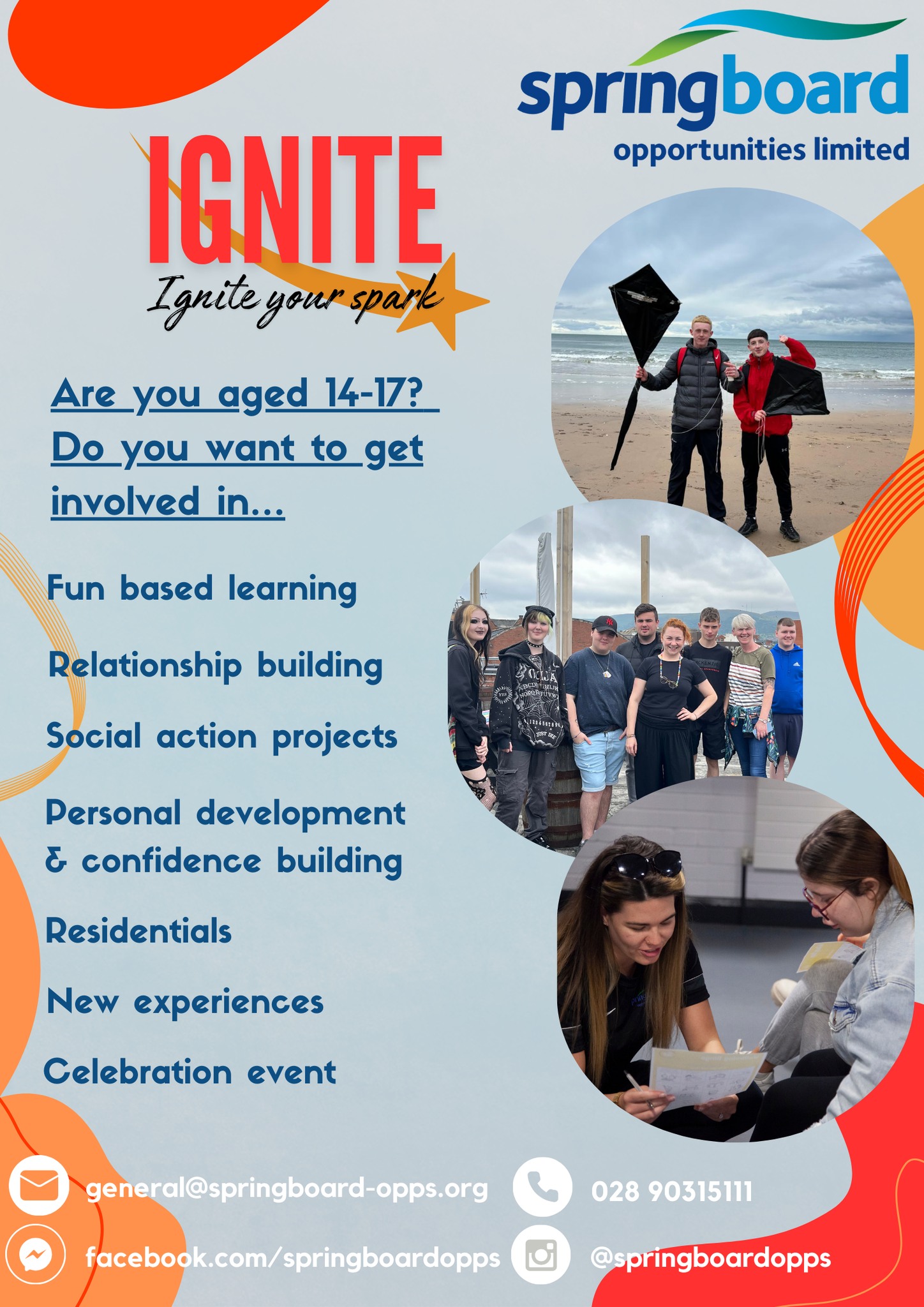
Flyer – Ignite is a fun based learning programme for 14-17 years olds to get involved in relationship building, social action projects, personal development and confidence building, residentials, new experiences and celebration event.
Participants from both the Journeys and HeadStart programmes can benefit from:
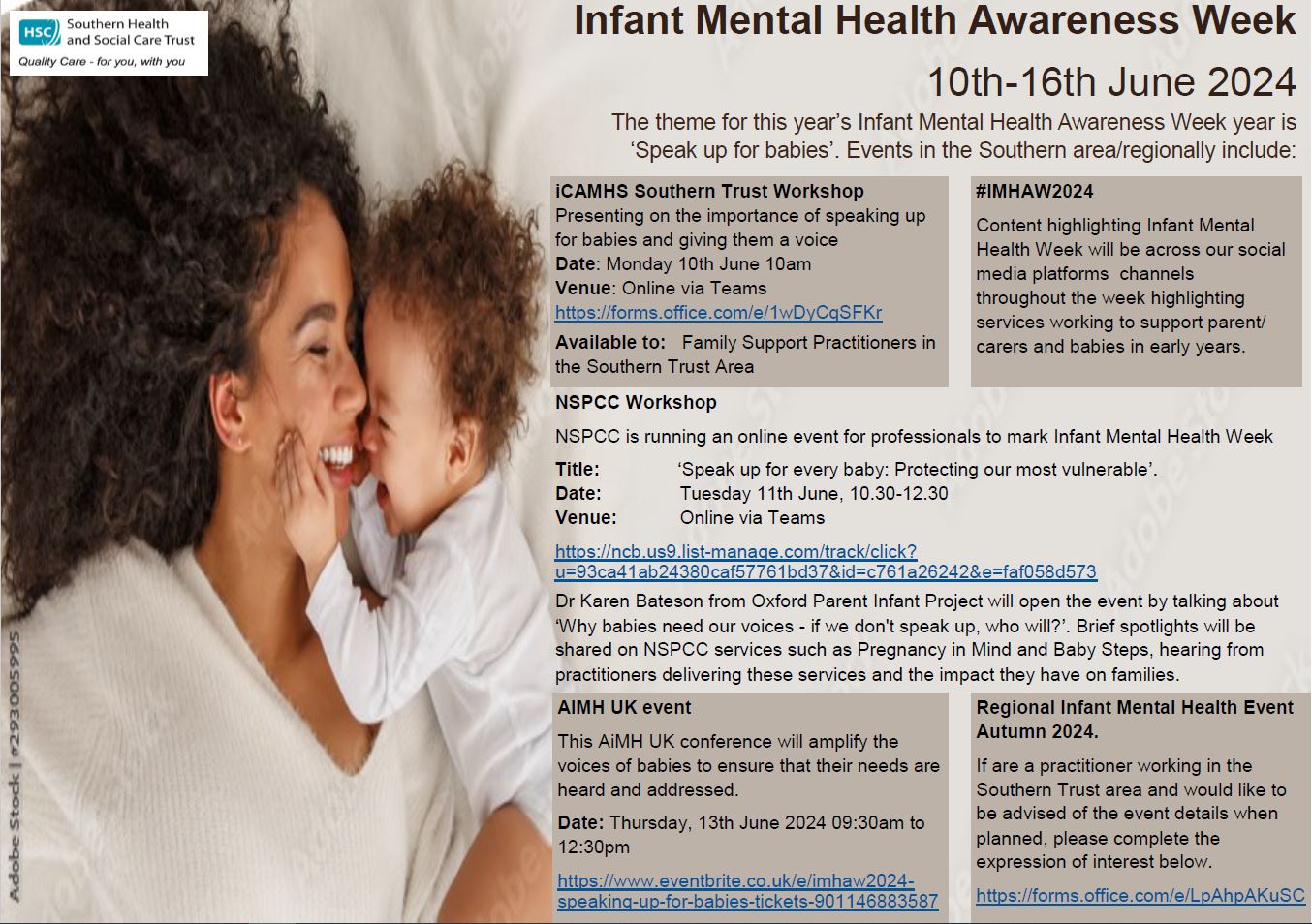
Monday 10th June marks the beginning of Infant Mental Health Week. The theme this year is ‘Speak up for babies’
The Southern Area School Uniform Recycling Toolkit is a FREE resource for any school, community organisation or group to use to help set up a recycling scheme. Including editable flyers, checklist templates and evaluation tools, this resource can be used across Northern Ireland – download here
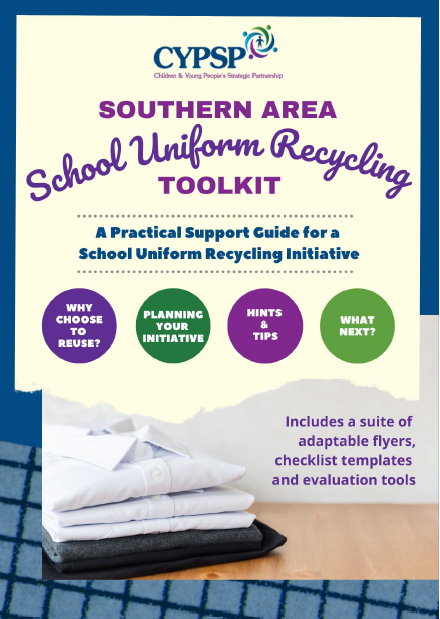
For anyone who wishes to use the Toolkit, or for further information, contact Darren Curtis, CYPSP, at localityplanning@ci-ni.org.uk, as we aim to track all usage of the resource to demonstrate the impact of this initiative.
See our 2023 Toolkit Infographic to find out about the impact of last year’s School Uniform Recycling Initiative on schools and organisations.