New Report Highlights Changing Picture for Children and Young People in Northern Ireland

A newly published regional monitoring report reveals significant demographic change, growing pressures on services, and mixed progress across health, wellbeing and education for children and young people in Northern Ireland.

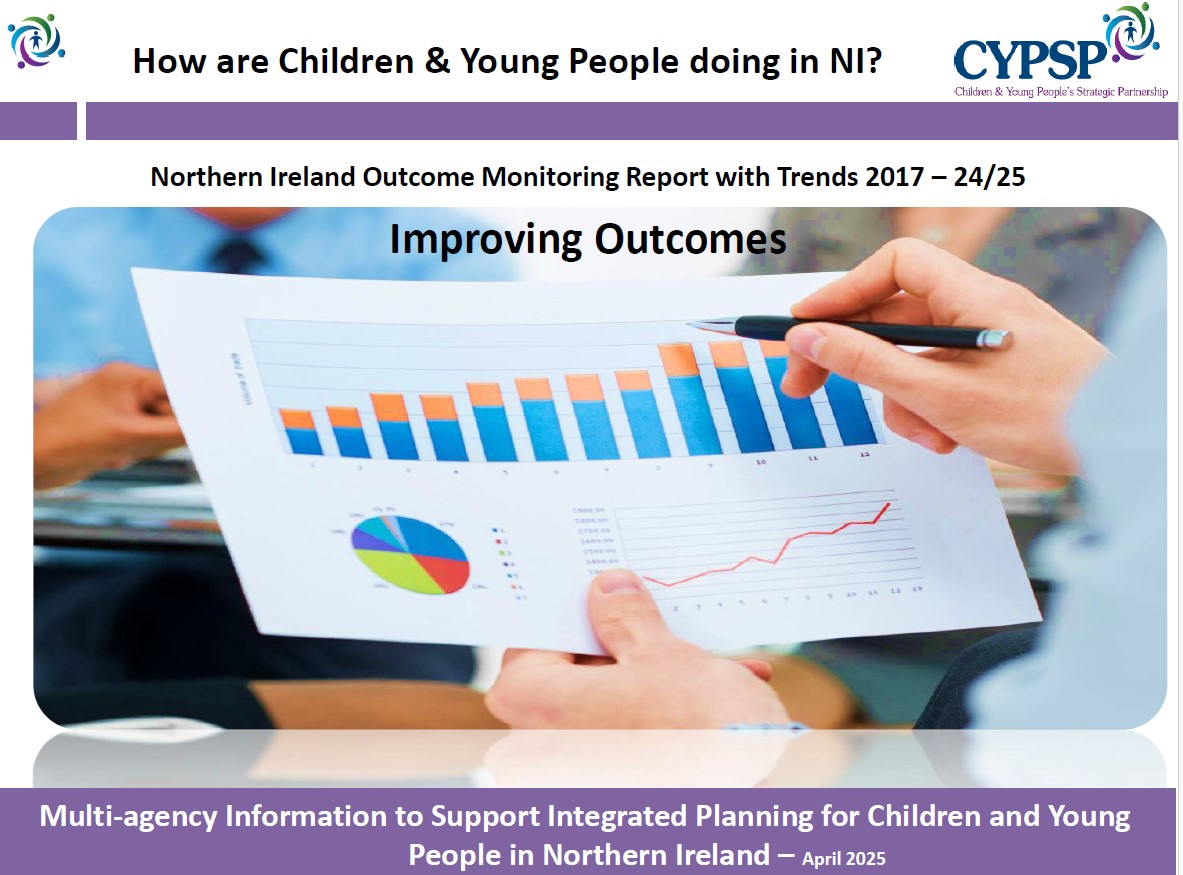
The Northern Ireland Outcome Monitoring Report 2017–2025, released today by the Children’s Services Planning Team on behalf of the Children and Young People’s Strategic Partnership (CYPSP), presents the most comprehensive picture to date of how children and young people are faring across eight key outcomes, drawing together multi‑agency data from health, education, justice and social care.  Download Here

Fewer Children, But Growing Need

The report shows that while children and young people still make up almost a quarter of the population, their numbers are falling. In 2024, Northern Ireland had 435,536 children aged under 18, representing 22.6% of the population. Population projections point to a 9.6% decline in the 0–17 age group by 2043, with the steepest fall among children aged 5–9.

At the same time, the needs of children are becoming more complex. The number of children in contact with services continues to rise, despite the shrinking child population, creating increased pressure on health, social care and education systems.

Health Gains Offset by Emerging Concerns

Encouraging progress has been made in some areas of child health. Births to teenage mothers have fallen to their lowest level on record, accounting for 2.0% of all births in 2024, and overall rates of smoking during pregnancy continue to decline.

However, the report highlights serious concerns:

  • Infant mortality increased to 4.5 deaths per 1,000 live births in 2024
  • MMR immunisation uptake fell to 89.7%, well below the WHO target of 95%
  • Breastfeeding at hospital discharge dropped to 46.2%, the lowest in eight years

Childhood obesity remains persistently high, with 15.5% of Primary 1 children overweight and 20.8% of Year 8 pupils classed as overweight in the most recent data.

Rising Disability and Mental Health Pressures

One of the most striking trends in the report is the continued rise in disability among children. By February 2025, over 34,600 children aged 0–15 were receiving Disability Living Allowance, with autism and ADHD featuring prominently.

Mental health indicators present a mixed picture. While 60% of 16‑year‑olds report good or excellent mental wellbeing, more than one in ten describe their mental health as poor. Hospital admissions for self‑harm among under‑18s fell overall, but remain higher than average in Belfast, Southern and Western Trust areas.

Education: Strong Attainment, But Attendance Challenges

Educational outcomes remain comparatively strong, with 87.4% of young people achieving five GCSEs at grades A–C*, though attainment in English and Maths continues to lag behind overall GCSE performance.

Attendance remains a concern:

  • 8.0% of primary pupils and 17.6% of post‑primary pupils attended school less than 85% of the time in 2024/25
  • Belfast consistently records the highest levels of absence

The proportion of young people aged 16–24 not in education, employment or training (NEET) stood at 9.4%, lower than the UK average, but still representing a significant cohort at risk of long‑term disadvantage.

Safeguarding, Care and Stability

At March 2025:

  • 2,283 children were on the Child Protection Register
  • 4,188 children were looked after, the highest number since records began under current legislation

Nearly half of children in care have been looked after for more than three years, highlighting the long‑term nature of intervention for many families.

The report also shows continued concern around domestic abuse, racist hate crime, and child homelessness, with more than 5,000 children living in temporary accommodation across Northern Ireland.

Poverty and Inequality Persist

Although child poverty levels have fallen slightly, around 67,000 children (15%) are still living in relative or absolute low‑income poverty. Western areas continue to experience higher rates, underlining long‑standing regional inequalities.

Free school meal entitlement remains high, particularly in Belfast and Western areas, reinforcing the link between deprivation and educational outcomes.

Informing the Next Children’s Services Plan

The report will directly inform the development of the Northern Ireland Children’s Services Plan 2025–2028, helping partners target resources, shape early intervention, and focus on outcomes where need is greatest.

Publishing today, CYPSP say the findings underline the importance of joined‑up planning, rights‑based approaches, and early support to improve outcomes for children, young people and families across Northern Ireland.


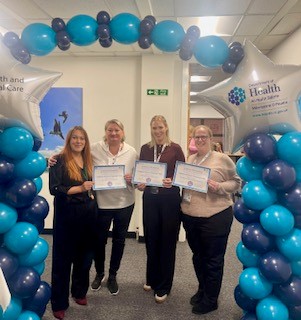
Celebrating Excellence: Children’s Services Planning Team Recognized for Outstanding Contributions

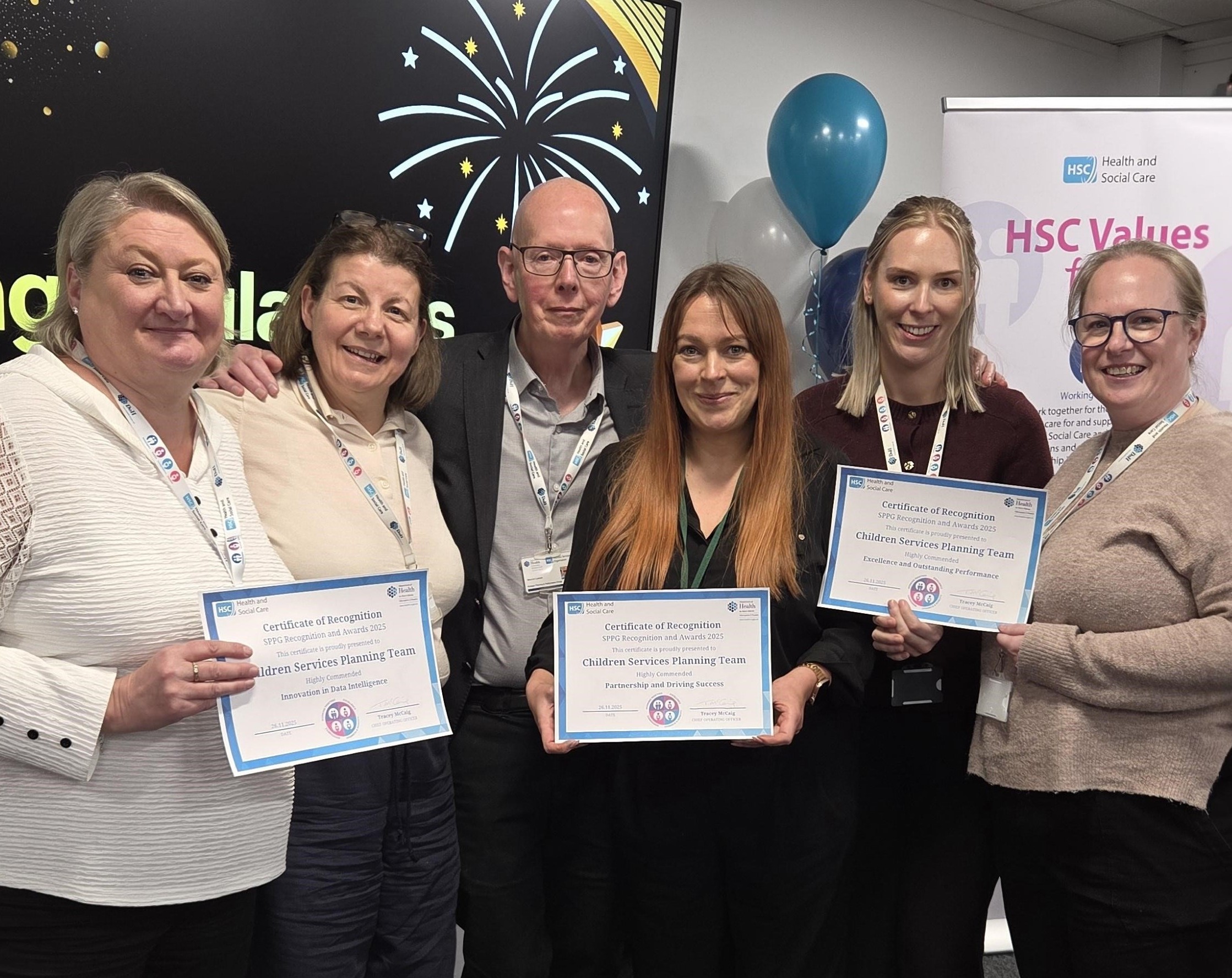
At this year’s SPPG Recognition and Awards event, the Children’s Services Planning Team was celebrated for its exceptional work in supporting the Children and Young People’s Strategic Partnership (CYPSP). The team received multiple commendations for initiatives that have made a real difference to children, young people, and families across the region.

Driving Success Through Collaboration

The team was highly commended under the Partnership and Driving Success category for its work on The Youth Wellness Web. This innovative online platform provides young people with easy access to mental health and wellbeing resources, empowering them to find support when they need it most.

“The Youth Wellness Web is about giving young people the tools to take control of their wellbeing. It’s a collaborative effort that reflects our commitment to listening and responding to their needs,” said a spokesperson from the Children’s Services Planning Team.

Explore the Youth Wellness Web

Innovation in Data Intelligence

The team was also highly commended in the Innovation in Data Intelligence category for its Interactive Mapping and Performance System. This system represents a significant step forward in how data is used to inform planning and service delivery for children and families. By visualizing key indicators and trends, the platform enables decision-makers to target resources effectively and respond to emerging needs with precision.

Learn more about CYPSP Mapping Tools

Breaking Down Barriers with the Translation Hub

In addition, the team’s Translation Hub was recognized under the Excellence and Outstanding Performance category. This initiative ensures that vital information and resources are accessible to families whose first language is not English. By providing translated materials and culturally sensitive communication, the hub promotes inclusivity and equal access to services, strengthening support for diverse communities.

Access the Translation Hub

Commitment to Children and Families

These achievements highlight the unwavering commitment of the Children’s Services Planning Team to improving the lives of children and young people across the region. Their work demonstrates how collaboration, creativity, and data-driven approaches can lead to meaningful change and better outcomes for families.

“These projects show what can be achieved when we work together with a shared vision for children and young people. Congratulations to everyone involved,” said Tracey McCaig, Chief Operating Officer.

Congratulations to Bronwyn, Valerie, Louise, Sharon and Yvonne

Western Area FYI – Issue 20 – July 2025

Your FYI is a monthly round up of all things family support and early intervention / prevention across the Western trust and beyond.

Download Issue 20

(Note: Newsletter will download directly to your device.  Look out for the pop-up box and click on open file when it appears)

If you would like to contribute upcoming consultations, training, articles, or events that practitioners from the community, voluntary or statutory sectors within the Western Trust will find useful please contact:

Dr Priscilla Magee – Mobile  07880723076     priscilla.magee@westerntrust.hscni.net

Paul Sweeney – Mobile  07387259117     paul.sweeney@westerntrust.hscni.net

Focusing on Families Survey

The Focusing on Families survey is your chance to share your views on how family support services in Northern Ireland can best meet the needs of children, young people and families.

If you are a child, young person, parent/carer or practitioner who cares about family support services in Northern Ireland, we want to hear your views!

This short survey is being conducted by Stats & Stories for the Children’s Social Care Reform Programme and covers five key themes:

  1. The purpose of family support services
  2. The values that should guide them
  3. The types of support that matter most
  4. Ideas for a future family support model
  5. How support services can make a difference to families

The Focusing on Families survey should take less than 10 minutes to complete. We encourage you to provide honest feedback. Your feedback will help shape the Family Support Strategy for Northern Ireland, ensuring that services focus on the needs of families.

Please click on the link for the survey: https://www.surveymonkey.com/r/FocusingonFamilies25

If you have any questions about the survey, please contact Dr. Donna Kernaghan at donna@statsandstories.co.uk.

Mental Health Data and Outcomes Conference – QUB

Children’s Services Planning team members Valerie Maxwell, Children Services Planning & Information Manager and Bronwyn Campbell, Lead for the Family Support Hubs Network were delighted to attend and present at Queen’s University Belfast Mental Health Data and Outcomes Conference on Tuesday 20th May 2025 in the Great Hall, along with Strategic Planning and Performance Group colleagues, Gavin Quinn, Head of the Regional Mental Health Service and Martina McCafferty, Mental Health Lead.


Gavin opened the conference and provided  context and an overview of the development of the new Regional Mental Health Service and the importance of Data to the Service moving forward.  Martina along with colleagues Hannah Brown, BHSCT and Mary Donaghy, Macmillan provided an update on the Journey of Think Family in NI and the benefits of implementing the model across systems.  they also shared how they were developing data and outcomes across complex systems.


Valerie and Bronwyn presented on reporting trends and capturing outcomes over time – Valerie shared information about the Children and Young People’s Strategic Partnership and how they have implemented an OBA Outcomes planning framework across their infrastructure based on a multi-agency outcomes and indicator framework.  She also shared examples from the CYPSP Information systems including their Interactive Map Dashboards and new NI Outcome monitoring report presenting information at different geographical levels from Northern Ireland level, to Local government District, Trust level data and down to Ward level highlight how the data is used to assess need and also measure population outcomes.

Bronwyn then presented how information is used at Family Support Hub level providing an overview of what Family Support Hubs are and their purpose. She focused down to the 8 Hubs in the WHSCT area and provided information on supporting children, parents and families with their emotional wellbeing and mental health.  Bronwyn was also able to share how unmet need is identified on the ground and fed back up through locality planning groups and outcomes groups for partners to look at how best as a multi-agency partnership they can fill those gaps and meet the needs.  Bronwyn then shared an anonymised case study on one child and mother’s journey and the positive impact and outcomes achieved following support identified by the local hub.

Valerie concluded the presentation by sharing examples of CYPSP Report Cards and Family Support Hub Report Cards.